Geometry Tower
- 3.5
- Rating
- 1.00M
- Installs
- Free
- Price

 Analysis by App-foxy
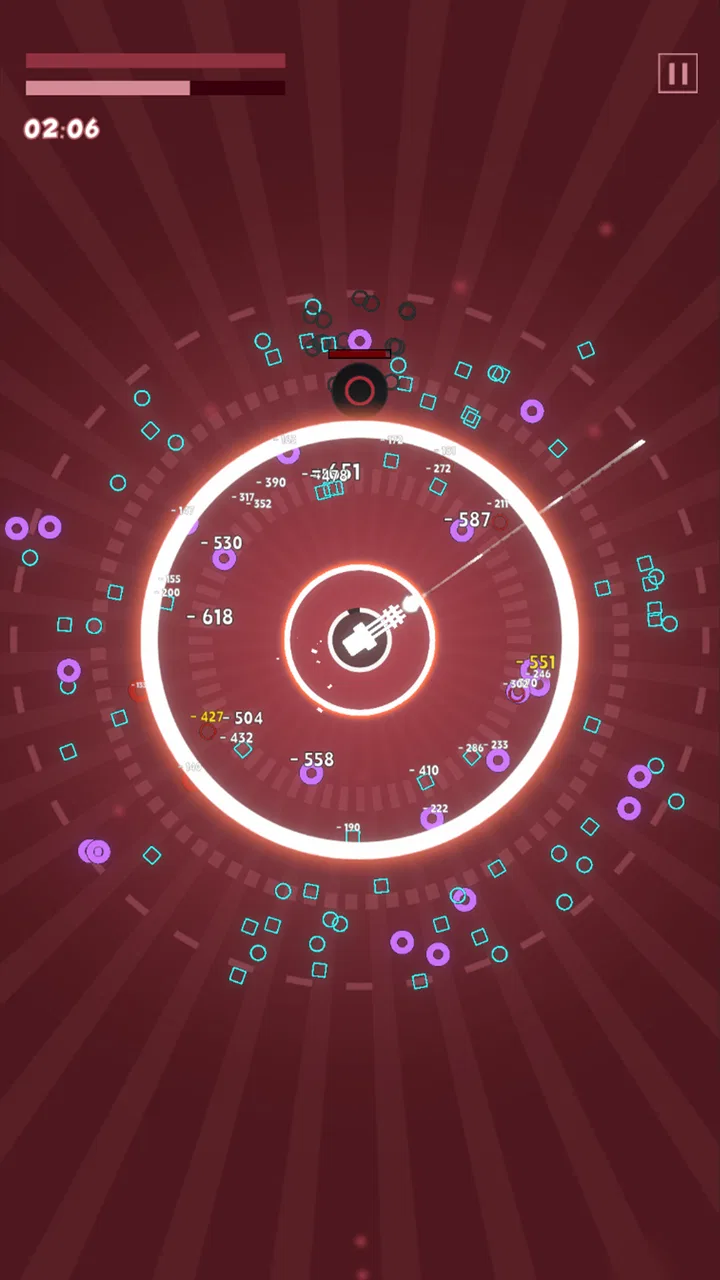
I picked up Geometry Tower expecting a quick strategy game built around simple shapes, but I ended up treating it more like a compact challenge for short, focused sessions. Developed by CyberJoy Games, this free roguelike game asks me to improve a tower, attack enemies, and keep going as the pressure rises. That description sounds straightforward, yet the appeal comes from deciding what deserves attention before the next threat arrives.
It works particularly well on a shared household device. One person can play for a few minutes, hand the phone over, and leave the next player with the same basic challenge rather than a complicated setup ritual. I would not call it a family game in the traditional board-game sense, because the action remains individual and progress depends on the person holding the device. Still, its quick-turn structure makes it easy to fit between chores, commuting, or a short break.
How Geometry Tower feels in everyday play
The central loop is easy to understand: strengthen the tower, deal with enemies, and survive the run. What makes that loop interesting is the tension between immediate defense and longer-term improvement. Spending attention on one part of the tower can leave another weakness exposed, while delaying an upgrade may make the next encounter harder than expected. I found myself making small decisions constantly rather than waiting for one dramatic strategic moment.
You May Also Like

 Blood Strike: 2.5 Anniversary
Blood Strike’s Loadouts Turn Every Drop Into a Tactical Gamble
A close look at Blood Strike’s custom loadouts: how fast access to signature weapons reshapes its battle royale rhythm, rewards preparation, and narrows the gap between fights.

 Pandora - Music & Podcasts
Pandora’s Music Is Easy to Start, but Harder to Recover
Pandora’s strength is its low-effort path from a seed to a station. Its weak spot is how much confidence it asks you to place in connection, setup, and quiet recovery.

 8 Ball Pool
 Is Built on Rivalries, Rematches, and Routine
A close look at the rivalries, rematches, shared routines, and unanswered safety questions that turn a quick pool match into a persistent mobile community.

 Samsung Music
’s Quiet Strength Is Playing What You Already Own
Its reach comes less from spectacle than from dependable access to a personal library. That simplicity is both the app’s strongest retention engine and its ceiling.

 AccuWeather: Weather Radar
AccuWeather Review: A Quick, Clear Forecast for Everyday Decisions
For everyday plans, the best forecast is the one you can understand quickly. AccuWeather makes rain timing, radar, and local conditions easy to act on, with a few trade-offs.

 Hill Climb Racing
Why Hill Climb Racing Still Turns Crashes Into One More Run
A tiny car, a bumpy hill and one more upgrade: Hill Climb Racing keeps resurfacing because its simple chaos makes every near-miss feel personal.
More From Our News Desk



That makes it a useful choice for someone who enjoys strategy games but does not always have time for a long campaign. I can start a session without needing to remember a complicated story or a large roster of characters. The roguelike structure also gives each attempt a feeling of risk: a run is not simply a straight march toward a predictable ending, so repeating the game does not feel exactly like replaying the same level.
The geometric presentation helps keep the action readable. The visual idea is clear enough that I can concentrate on threats and upgrades instead of sorting through a busy fantasy interface. That simplicity is a strength when playing on a smaller screen, especially if the phone is passed around the home. A younger player can understand the broad objective quickly, while an older player can focus on timing and resource choices.
A practical shared-device scenario
Imagine using the game during a quiet evening when several people share one tablet or phone. I might play a run while waiting for dinner, stop when I need to put the device down, and let someone else take a turn later. The game is best approached as a personal run rather than a cooperative activity, so the household needs to agree on whose turn it is and whether unfinished progress can be interrupted.
That last point matters. A shared device can create confusion if one person assumes the next player should continue a run, while another expects to start fresh. I would recommend saying out loud whether the current attempt is being preserved for the same player or handed over as an informal challenge. This is not a built-in family workflow; it is simply a sensible household habit that prevents arguments over progress.
For quick coordination, a simple rule works well: the person who starts a run finishes it, unless everyone agrees otherwise. That keeps the roguelike tension intact and avoids turning the game into a contest over who gets the strongest tower. If several people want to compare results, they can do so verbally, but I would not treat the app as a full multiplayer experience.
What to expect during the first sessions
My first sessions were mainly about learning how aggressively to upgrade. The obvious temptation is to improve the most visible strength immediately, but survival usually rewards looking at the whole situation. I began paying closer attention to whether an upgrade solved an urgent problem or merely made an already comfortable part of the tower stronger.
A useful habit is to pause mentally before every major choice, even when the game feels fast. I ask myself whether the next encounter is likely to punish weak defense, insufficient damage, or poor preparation. This small check prevents impulsive spending and gives the game more strategic texture than its simple presentation initially suggests.
Another practical tip is to treat early runs as experiments rather than failed attempts. A roguelike game can make a loss feel frustrating if I expect every run to be permanent progress. Instead, I use a failed attempt to identify which decision caused the run to collapse. That approach makes repetition more rewarding and is especially helpful for players who are new to the genre.
The game is free to download, but it includes in-app purchases ranging from $0.99 to $99.99 per item. That range is important for a shared household device. Before letting a child or another family member play, I would discuss purchasing expectations clearly and check the device’s purchase protections. The game’s free entry point is convenient, but “free” should not be treated as permission for unrestricted spending.
Boundaries when several people use one device
I would also establish a clear account boundary before regular household use. The game should be treated as belonging to the person or account that installed and plays it, unless the household has deliberately agreed on shared access. I would not assume that progress, purchases, or preferences are designed to separate automatically between family members.
This is one of the main differences between casual shared use and a dedicated family platform. Passing the device around is easy; keeping everyone’s progress distinct may not be. If two players care about separate runs, the simplest solution is to take turns with a clear verbal agreement and avoid changing another person’s active attempt. If independent profiles are essential, I would choose a game that explicitly emphasizes multi-user support instead.
The same caution applies to purchases. A parent may be comfortable with a small optional purchase, while another adult may want the game to remain entirely free. Because the available purchase range reaches from a low-cost item to a much larger one, I would not leave the device unattended with payment access available. This is ordinary digital housekeeping, but it becomes more important when the phone or tablet belongs to everyone in the home.
Age context is fairly approachable. Geometry Tower carries an Everyone content rating, which fits its abstract presentation and accessible premise. I still would not use an age label as a substitute for supervision. The more relevant questions for a household are whether the player understands the upgrade loop, whether losing a run causes frustration, and whether the person knows not to make purchases without permission.
Where the strategy comes from
The most interesting part of the design is the trade-off between improving the tower and responding to enemies. A player who only reacts to the current threat may survive the next moment but enter the following one with a weak foundation. A player who invests too far ahead can struggle immediately. I like that the game makes both mistakes possible, because it turns each run into a lesson in priorities.
My best advice is to avoid upgrading on autopilot. When an option looks attractive, I consider three things: does it help me survive the next danger, does it improve the tower’s broader stability, and will choosing it make a later decision more difficult? Even without a complicated rules explanation, this way of thinking creates a more deliberate play style.
It also helps to separate “comfortable” from “safe.” A tower can appear strong because one feature has improved, while another weakness remains untouched. I found that runs improved when I stopped chasing the most satisfying upgrade and instead covered the gap most likely to end the attempt. That is a small but meaningful strategic distinction that the store summary alone would not explain.
For younger players, I would frame these choices as simple questions rather than giving them the answer. Ask what the tower needs most right now, then let the player decide. That makes the game a gentle exercise in prioritization without turning it into homework. For adults, the same process becomes a compact mental reset during a busy day.
How it compares with familiar strategy alternatives
Compared with large base-building strategy games, this is much easier to pick up. I do not need to manage a broad empire, memorize numerous units, or commit to a lengthy campaign before seeing whether the core loop suits me. That makes Geometry Tower a better fit for short sessions and shared devices than games that depend on a single player’s long-term account.
It is also more focused than a traditional tower-defense game. Instead of presenting the experience primarily as a matter of placing a long line of defenses across a map, it centers my attention on improving one tower while dealing with incoming enemies. Players who enjoy spatial planning across several lanes may find that narrower focus limiting, but I appreciated the reduced clutter.
Against other roguelike strategy games, the geometric style gives it a lighter first impression. The trade-off is that players looking for deep character builds, extensive storytelling, or a large collection of systems may outgrow it. I would recommend it to someone who wants the decision-making rhythm of a roguelike without committing to a dense, content-heavy package.
It is not the right choice for someone seeking direct household cooperation. There is no reason to approach it as a shared battlefield where several family members act at once. A cooperative game would be better if the goal is to plan together in real time. Geometry Tower suits a different arrangement: one player makes the decisions, while others can watch, comment, or take their own turn.
Performance, access, and version details
The game is available for Android users on version 7.0 or later, which covers a broad range of devices. Its current version is 0.2.105. I would still judge the experience on the actual phone or tablet rather than relying only on the operating-system requirement, because screen size, touch responsiveness, and battery condition can affect how comfortable repeated runs feel.
Its release date was July 31, 2024, and the game has already passed one million installs. The average rating is 3.9 from around fourteen thousand ratings, with 446 written reviews. I read that combination as a sign of a game with a real audience but also a reason to keep expectations balanced: it is popular enough to have been tried widely, yet not presented as universally loved.
That middle-ground rating matches my impression. The core idea is easy to enjoy, but the experience depends heavily on whether the player likes repeating runs and making small upgrade decisions. Someone who wants constant novelty may find the loop repetitive, while someone who enjoys refining choices can appreciate the gradual improvement in judgment.
Because it is free, I see it as low-risk to try, provided the household handles purchases sensibly. I would install it for a player who wants an accessible strategy experiment, not for someone who needs a fully separate profile system, a story-driven adventure, or guaranteed cooperative play.
Who will enjoy it and who should skip it
I think the strongest audience is made up of players who like short roguelike sessions, clear objectives, and decisions that matter without requiring a large rulebook. It is also a good match for adults who want a small strategic distraction and for households where the device is shared casually rather than managed as a multi-user console.
It can work for children under ordinary family guidance because the presentation is abstract and the age rating is Everyone. I would introduce it by explaining the difference between playing and buying. The child can make tower decisions independently, but purchases should remain an adult decision unless the household has explicitly arranged otherwise.
I would skip it if you need robust account separation, a campaign that can be played cooperatively, or a strategy game with extensive long-term planning. I would also look elsewhere if repeated attempts feel more annoying than satisfying. The roguelike structure is the point, so players who dislike starting over will probably not change their mind after a few sessions.
For a shared home, I would describe it as a good “pass the device” game rather than a family-management game. It supports informal coordination because the objective is easy to explain, but the household still has to manage turns, progress, and spending itself. That distinction keeps expectations realistic.
My household verdict
After spending time with it, I see Geometry Tower as a compact strategy game with a clear identity. Its strongest quality is the way it turns a simple tower-and-enemy setup into a series of meaningful priorities. I enjoyed learning not just which upgrade looked strongest, but which weakness mattered most at that moment.
For everyday use, I would keep it on a shared device when everyone understands that runs are individual and purchases are controlled. A short session can fit naturally into a busy routine, and the game is approachable enough for different ages to understand the basic goal. The best shared experience comes from watching, discussing choices, and taking separate turns rather than expecting built-in cooperation.
My final recommendation is positive but specific: try it if you want a free, accessible roguelike strategy game that rewards careful decisions in compact sessions. Keep your expectations modest about account boundaries and household coordination, and treat the purchase range seriously. With those limits in mind, Geometry Tower is an enjoyable little challenge that earns its place on a phone or tablet, especially for players who like improving their decisions one run at a time.
FAQs for Geometry Tower
01What is Geometry Tower and how does it work?
Geometry Tower is a puzzle game where players stack various geometric shapes to build the tallest and most stable tower possible. The game challenges your spatial awareness and balance skills by using physics-based mechanics. Players need to carefully place each shape to avoid toppling the tower, making it a blend of strategy and reflexes.
02Is Geometry Tower free to download and play?
Yes, Geometry Tower is free to download on both Android and iOS platforms. While the game offers a complete experience without payment, it includes optional in-app purchases for enhancements or to remove ads. These purchases are not necessary to enjoy the game fully, allowing players to decide how they want to engage with additional content.
03What are the main features of Geometry Tower?
Geometry Tower offers a variety of features including multiple levels with increasing difficulty, a wide range of geometric shapes, and engaging physics-based gameplay. The game also includes leaderboards to compete with friends and players worldwide, as well as daily challenges to keep the gameplay fresh and rewarding.
04Does Geometry Tower require an internet connection to play?
Geometry Tower can be played offline, making it a great option for users who may not always have internet access. However, certain features such as leaderboards and daily challenges require an internet connection. This allows players to enjoy the core game offline while still accessing additional content when online.
05Are there any accessibility options available in Geometry Tower?
Geometry Tower includes several accessibility options to cater to different player needs. These include adjustable sound settings, visual aids for colorblind users, and customizable control sensitivity. The developers are committed to ensuring the game is enjoyable for as many players as possible, constantly updating to accommodate user feedback.
Pros
- Engaging and challenging puzzles.
- Minimalist and visually appealing design.
- Smooth and responsive controls.
- Regular updates with new levels.
- No intrusive ads during gameplay.
Cons
- Limited tutorial for beginners.
- Levels can feel repetitive over time.
- Requires internet for certain features.
- Some in-app purchases are pricey.
- Occasional lag on older devices.

Geometry Tower
Gallery